
10 Best Places to Visit in Nottingham for Free (2026)
Discover the best places to visit in Nottingham for free. From Wollaton Hall to hidden tunnels and art galleries, plan your perfect budget-friendly trip today.
On this page
10 Best Places to Visit in Nottingham for Free
After my fifth trip to the East Midlands, I am always struck by how much this city offers without asking for a penny. Many travelers overlook the sheer volume of cultural and historical sites that remain open to the public for free. Our editors have reviewed every neighborhood to find the most rewarding spots that won't break your budget.
This guide was last refreshed in 2026 following a winter return visit to check seasonal opening hours and accessibility. Whether you are a student looking for study spots or a family planning a weekend, these locations provide genuine value. Nottingham remains one of the most affordable cities in the UK if you know exactly where to look.
Wollaton Hall and Deer Park
This stunning Elizabethan mansion served as Wayne Manor in The Dark Knight Rises, and it is easy to see why Christopher Nolan chose it. The hall houses Nottingham's Natural History Museum, with a collection of over 750,000 objects spanning fossils, minerals, and taxidermy specimens. Entry to the park and the museum is completely free, though parking costs around £5 if you drive. Residents are encouraged to cycle or walk in along the dedicated paths from Wollaton village.
The 500-acre deer park surrounding the hall is one of the finest free green spaces in the East Midlands. A herd of red and fallow deer roam the grounds year-round, and early morning visits before 09:00 often reward you with deer near the lake. Look near the main entrance path for a pair of Chinese guardian lions, gifted to the city by Ningbo — Nottingham's sister city in China — to mark a decade of civic partnership. Most visitors walk straight past them, but they are a genuinely charming detail that tells a wider story about the city's international connections.
The grounds are open daily. The hall itself is open 10:00–16:00; check the Visit Nottinghamshire free days out page for seasonal closures before you travel.
Museums, Art, and Culture in Nottingham
Nottingham Contemporary is one of the UK's largest contemporary art galleries, housed in a striking gold-patterned building at Weekday Cross in the Lace Market. Entry is free every day it opens: Tuesday to Saturday 10:00–18:00, Sunday 11:00–17:00. The lower-ground Blend cafe is a good place to pause between the multiple exhibition rooms. The building itself sits over exposed Roman-era foundations you can view through floor panels near the entrance.
The New Art Exchange on Gregory Boulevard in Hyson Green is a gallery that champions diversity in art and society, open Tuesday to Saturday 10:00–16:00. It is a short tram ride from the city center and often overlooked by visitors who stick to the Lace Market. The plant-based CafeBar runs a "pay what you can" Community Cafe on the third Thursday of every month. You can find current exhibitions listed at nottinghamcontemporary.org.
Green's Windmill and Science Centre in Sneinton is another cultural gem that most guidebooks understate. The restored 19th-century tower mill was home to mathematician George Green, whose theories underpin modern MRI machine technology. You can climb the interior on a windy day to watch the sails turn and the millstones grind. The adjacent science center is free to enter Wednesday to Sunday 10:00–16:00 and is one of the best Nottingham indoor activities for families in the eastern neighborhoods.
Parks, Gardens, and Outdoor Spots in Nottingham
Nottingham Arboretum is the city's oldest public park and arguably its most beautiful. It holds over 800 labeled trees in a Victorian layout, and a popular local legend claims the grounds inspired J.M. Barrie's Neverland. The arboretum is free from dawn until dusk and sits directly on the Arboretum tram stop. The central bandstand hosts free community music performances throughout summer, and the park's low-lit pathways make it a pleasant early-evening walk even in winter.
Colwick Country Park, a few kilometers east of the city center, offers a completely different outdoor experience. Two large lakes, miles of wooded trails, and a dedicated bird hide on the west shore make it a genuine nature reserve rather than just a park. Entry for pedestrians and cyclists is free 24 hours a day. The kingfisher population around the hide is well-established — locals say the best sightings happen between 07:00 and 09:00 in late spring.
Sherwood Forest, about 30 minutes north by car or bus, is home to the Major Oak — a veteran tree over 1,000 years old with a canopy spread of 28 meters. The forest itself and the visitor center are free; parking costs £5 but several bus services run from Nottingham city center on weekends. Stick to the marked trails in winter when the paths around the oak become muddy.
The Historic Lace Market and Old Market Square
The Lace Market was once the world center of the lace industry and still retains its grand red-brick Victorian warehouses. Walking through these streets is a free architectural tour — many buildings carry plaques explaining their role in the 19th-century trade that made Nottingham famous globally. The area now houses independent galleries, studios, and the Nottingham Contemporary gallery. Watson Fothergill's ornate buildings, recognizable by their Tudor-style towers and layered brick banding, are scattered throughout the Lace Market and Hockley; keep your eyes up.
Old Market Square is the civic heart of the city and one of the largest paved squares in the UK. The Council House portico anchors the east end, and at its base sit Leo and Oscar — two stone lions that Nottingham residents treat as unofficial city mascots. Look at the drainage channel running toward the Council House: it follows the line of the old wall that once separated the Anglo-Saxon and Norman quarters of the medieval town. Most visitors walk over it without knowing. The square hosts free seasonal markets and public performances year-round, including the large Christmas market in late November and December.
Just east of the Lace Market, Sneinton Market offers a more creative alternative to the high street. Its permanent units house independent coffee shops, vintage clothing stores, and artisan workshops. The weekend market adds food vans and gift stalls. It is a free afternoon in itself and less crowded than the central shopping areas, making it a good option on a Saturday when the city core is busy.
Family-Friendly and Budget-Friendly Options in Nottingham
Stonebridge City Farm on Stonebridge Road (NG3 2FR) is one of the best free family attractions in the city and is almost entirely absent from mainstream tourism lists. The farm is home to cows, sheep, ponies, goats, chickens, rabbits, guinea pigs, and a 17-year-old tortoise named Kevin. Entry is free, though donations are encouraged to support the 150+ volunteers who run it, many of whom have mental health challenges or learning disabilities. Opening times are 10:00–15:15 daily. It is a genuinely accessible option: the paths are pram-friendly and the farm actively works with visitors with additional needs.
Nottingham Central Library on Carrington Street is another excellent family stop. The building opened recently and has a children's library with an immersive play room, a dedicated exhibition space, and free high-speed Wi-Fi throughout. Opening hours are 09:00–18:00 most weekdays (until 19:00 on Wednesdays), 09:00–16:00 on Saturdays. The library also runs free children's reading clubs and events; details are posted at nottinghamcitylibraries.co.uk. Public toilets inside the building are free to use, which makes it a practical mid-day stop on a long walking day.
For families with older children, the Robin Hood Statue outside the castle walls and the Sky Mirror at Nottingham Playhouse are both free and work well as a combined 45-minute stop. The bronze Robin Hood monument sits at the base of the castle cliff and is accessible at all hours. The Anish Kapoor Sky Mirror — the same artist behind Chicago's Cloud Gate — sits on the Playhouse terrace five minutes away, reflecting the surrounding Victorian roofline in a polished steel dish. The terrace is publicly accessible during daylight hours and the Playhouse bar is open if you want a drink while children look for their reflection.
Hidden Gems: Sky Mirror and Park Tunnel
The Sky Mirror at Nottingham Playhouse is better known internationally than locally, which is part of what makes it worth seeking out. Anish Kapoor installed the 6-meter reflective steel dish in 2001, and it captures the sky and surrounding architecture in a concave curve that warps the view in unexpected ways. On clear afternoons, the entire sandstone cliff of the castle appears compressed into the dish. It is also, as local guides have long noted, a reliable gathering spot for pigeons attempting to headbutt their own reflection — unexpectedly entertaining for children.
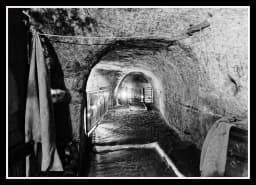
The Park Tunnel requires some detective work to find, which is exactly why it feels rewarding. Head to the Upper College Street car park and look for a set of unassuming stone steps descending from the street level. The tunnel below was excavated in 1855 on the orders of the Duke of Newcastle, cut through the sandstone foundations to create a carriage route between his hunting grounds and the town center. The architect miscalculated the gradient and it was too steep for loaded horse-drawn carts, rendering it architecturally impressive but practically useless from day one. The temperature inside stays noticeably cool in summer, and the hand-carved sandstone walls hold their own against any paid cave attraction in the city. Photographers find the late-afternoon light at the entrance particularly good for shadow detail. It is one of the best Nottingham things to do for young adults seeking an offbeat afternoon.
Free Seasonal Events and Festivals in 2026
Heritage Open Days in September is England's largest free festival of history and culture, and Nottingham's version regularly includes access to buildings that are otherwise closed year-round. In past years this has meant entry to historic courtrooms, private gardens in the Park Estate, and access to the Wollaton Hall walled garden with guided volunteer tours. Booking is required for the most popular sites; check the official listings early in the summer to secure spots before they fill.
The Nottingham Puppet Festival 2026 is confirmed for the city center, bringing large-scale street installations and free outdoor performances. The biennial event is known for its giant animatronic figures — past years have included a four-meter Worker Bee and a mountain hare moving through the crowds. Specific dates and locations are published on the official arts listings closer to the event. It draws a significant crowd so arriving early for the main performance sites is advisable.
The NTU Student Showcase in early summer is one of the most underrated free cultural events in the city. Architecture, product design, and fashion graduating students exhibit at the Nottingham Trent University city-center campus buildings. The architecture and product design cohort in particular produces work of a standard that rivals commercial design exhibitions. Admission is free and open to the general public; dates are announced on the NTU website each spring.
How to Plan a Free Day Out in Nottingham
The city center is compact enough that most free landmarks sit within a 20-minute walk of each other. A practical morning-to-evening route starts at Wollaton Hall when the park opens at 08:00 (or 09:00 on weekends), then heads into the city center by bus or on foot for the Nottingham Contemporary and the Lace Market. After lunch — packed or from a budget street-food stall at Sneinton Market — the afternoon covers the Sky Mirror, the Park Tunnel, and Old Market Square. This sequence avoids backtracking and keeps travel costs at zero if you walk.
Many of the free sites rely on small donations or cafe purchases to maintain their facilities. Bringing £5–10 for coffee and a sandwich at one of the gallery cafes is a reasonable way to support places that charge nothing at the door. For a full overview of all Nottingham activities, including paid options worth budgeting for, consult the local tourism board's listings before your visit.
Always pack a reusable water bottle: free refill stations are available in the Victoria Centre and at the Central Library. Public toilets are free at the Victoria Centre, the Central Library, and inside the major shopping centers. Checking the city library's event notice board on arrival often reveals one-off community events that don't appear on the main tourism listings. Nottingham rewards visitors who look beyond the standard brochure.
Frequently Asked Questions
Which free places in Nottingham are best for first-time visitors?
Wollaton Hall and the Old Market Square are the top choices for newcomers. These iconic spots offer a mix of history and architecture without any entry fees. You can easily reach both via public transport or a short walk from the city center.
Is Wollaton Hall free to enter?
Access to the parkland and the main hall's natural history exhibits is completely free. You only need to pay if you want to join a guided tour or use the car park. It remains one of the most popular cheap things to do in the region.
How do I find the Park Tunnel in Nottingham?
Head to the Upper College Street car park near the Park Estate and look for a set of stone steps descending from street level. The sandstone tunnel entrance is at the bottom. It is accessible at all times and completely free to walk through.
What are the best free activities for students in Nottingham?
The Nottingham Contemporary and the Central Library on Carrington Street are ideal for students. Both offer free entry and high-quality spaces for creative inspiration or quiet study. They are centrally located and very accessible from the main campuses.
Nottingham proves that you don't need a large budget to enjoy a rich and varied travel experience. From the cinematic grounds of Wollaton Hall to the cool depths of the Park Tunnel, the city rewards those who take the time to look beyond the main shopping streets. Use the seasonal events calendar to time your visit for Heritage Open Days or the Puppet Festival in 2026, and you will leave with a far more complete picture of the city than the average tourist guide provides.
 12 Best Cheap Things to Do in Nottingham (2025)May 16, 2026