12 Best Nottingham Sightseeing Attractions & Hidden Gems (2026)
Discover the best of Nottingham sightseeing, from the historic City of Caves and Nottingham Castle to hidden gems like the Park Tunnel and Sky Mirror.
On this page
12 Best Nottingham Sightseeing Attractions & Hidden Gems
Nottingham's true character lies beneath the pavement. This East Midlands city layers Robin Hood folklore over a genuinely extraordinary subterranean geology: more than 800 caves cut directly into soft Triassic sandstone, the largest such urban cave network in the UK. That underground geography shapes the city's history, its pubs, its defensive castles, and even its best-hidden pedestrian tunnels.
This guide covers the essential Nottingham sightseeing stops for 2026 — from the reimagined Castle and the National Justice Museum to the lesser-known Park Tunnel and George Green's working windmill. All pricing and operating hours have been verified for the current year. Whether you have one full day or a long weekend, this list gives you enough detail to build a real itinerary without guesswork.
Nottingham Castle: A Thousand Years of History
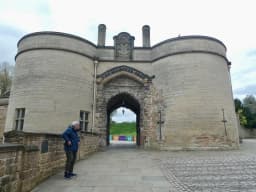
William the Conqueror ordered the first fortification here in 1068, choosing the dramatic sandstone outcrop — Castle Rock — for its commanding views over the surrounding plain. The structure was rebuilt several times before being reduced to a ducal palace in the 17th century and then gutted during the 1831 Reform Riots. The current building reopened after a major £30 million redevelopment and now houses some of the most engaging galleries in the Midlands.
Adult entry costs £12–£15 in 2026. The castle opens daily from 10:00 to 17:00. The real highlight underground is the network of tunnels cut into Castle Rock itself — Mortimer's Hole, the passage where Edward III's men entered secretly to arrest Roger Mortimer in 1330, is accessible on the standard ticket. The Robin Hood gallery is thorough without being overly commercial, covering the ballad tradition, real historical outlaws, and the political context of the Sheriff legend. Visit this Nottingham Castle guide for a more detailed breakdown of the underground tunnel route.
The castle is fully wheelchair accessible via a lift. The panoramic terrace offers the best free view in the city centre — you do not need to pay for the museum to access the outer grounds.
City of Caves: Exploring the Subterranean Labyrinth
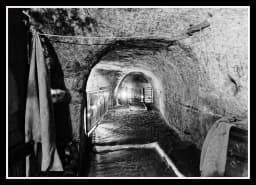
Beneath the old Broadmarsh shopping area, the City of Caves attraction opens a portion of the 800-plus sandstone caverns that honeycomb the ground under the city centre. These spaces have functioned as medieval tanneries, pub cellars, a WWII air raid shelter, and — most disturbingly — a row of Victorian slum dwellings carved directly into the rock. The actor-led tours are the standard option, running roughly 45 minutes at £8–£11 per adult; audio-guide self-led tours are available for those who prefer to move at their own pace.
Book in advance on Saturdays and school holidays — tour capacities are capped because the passages narrow significantly. Wear sturdy shoes with grip; the ground is uneven and permanently cool at around 14 degrees Celsius regardless of season. The caves keep the same temperature in July as they do in January, so bring a layer even in summer. For a wider read on what these spaces reveal about the city, the City of Caves guide covers the tannery section and the WWII shelter in detail.
Accessibility note: This site has multiple uneven steps and low ceilings. It is not suitable for wheelchairs or pushchairs, and visitors with limited mobility should call ahead before booking.
Old Market Square and the Council House
The Old Market Square is the second-largest surviving public square in England, pipped only by Trafalgar Square. The 1920s Council House — a neo-Baroque dome that dominates the southern end — was designed by Cecil Howitt and built to project civic confidence after the First World War. The two stone lions flanking the steps are named Leo and Oscar; local legend holds that the left lion roars if a virgin walks past and the right roars only when an honest politician passes by.
Look closely at the paving and you will find a thin metal channel running toward the Council House. This drainage line marks the line of the old Anglo-Saxon wall that once separated the Norman French quarter from the Anglo-Saxon settlement — the medieval boundary is still visible underfoot. The square is free to visit 24 hours a day and hosts major seasonal events including the Nottingham Beach in summer and the German Christmas Market in winter. Visit on a weekday morning before 09:30 to photograph the Council House facade without crowds.
The architect Watson Fothergill left his signature all around this square — look for the red-and-blue striped brickwork and gothic turrets on the surrounding Victorian buildings as you exit toward Hockley.
Wollaton Hall and Deer Park: The Real Wayne Manor
Wollaton Hall is a spectacular Elizabethan mansion built between 1580 and 1588 for Sir Francis Willoughby, designed by the Flemish-influenced architect Robert Smythson. Warner Bros. chose it as the exterior of Wayne Manor for Christopher Nolan's The Dark Knight Rises (2012), and the choice makes sense — the silhouette against the sky is genuinely dramatic. The hall houses Nottingham's Natural History Museum, with strong collections in geology and taxidermy that are worth the modest entry fee.
The surrounding 500-acre deer park is free to enter at any time. Both red and fallow deer roam across the grounds; keep a respectful distance during rutting season in autumn, when stags become unpredictable. The park is a 25-minute tram ride from the city centre on the NET line toward Toton Lane — alight at Wollaton or University of Nottingham stop and walk through the park entrance on Wollaton Road. There is also a cycle path from the city centre for those cycling.
The hall itself is fully accessible on the ground floor. The upper storeys involve staircases, so check with staff at the entrance if you need specific access arrangements. Guided ghost nights run periodically — check the Nottingham City Council events page for 2026 dates and prices.
The National Justice Museum: Crime and Punishment
The National Justice Museum occupies the former Shire Hall on High Pavement in the Lace Market — a building that served simultaneously as courthouse, prison, and police station from the 14th century onward. Costumed actors re-enact trials in the original Victorian courtroom, a format that works particularly well for children and for anyone drawn to dramatic interpretation of history. The cells below still hold the graffiti of former prisoners scratched into the walls.
Adult tickets run £12–£14 in 2026; family tickets offer better value if you have two or more children. The museum is open daily from 10:00 to 17:00. Book online to guarantee entry, especially on weekends, as the courtroom theatre sessions fill quickly. This is one of the best things to do in Nottingham for adults with an interest in dark or legal history.
The museum also covers the Robin Hood tradition with a dedicated gallery that situates the legends within the real social context of medieval England — a sharper treatment of the material than the souvenir shops near the castle offer.
Robin Hood Statue and the Legend of Sherwood Forest
The bronze Robin Hood statue outside the castle walls is the most photographed single landmark in Nottingham. It is free to access at any hour. Arrive before 09:00 if you want an unobstructed photo — tour groups begin arriving from around 09:30. The statue was unveiled in 1952 and depicts the outlaw drawing his bow, with the castle cliff rising behind him; the combination of the two in a single frame is the city's defining image.
Sherwood Forest itself is about 30 kilometres north of Nottingham city centre, easily reachable by bus from Victoria Bus Station (Nottingham City Transport route 27/28, roughly 50 minutes, around £4–£5 return). The forest visitor centre at Edwinstowe is free to enter. The Major Oak — a single English oak estimated at 800–1,000 years old with a canopy spread of 28 metres — is the centrepiece, and the walk from the car park to the tree takes about 15 minutes on a flat, well-maintained path. Heritage information is available via National Trust. The Robin Hood Festival runs each August in the forest if you want to time your visit for costumed characters and archery displays.
The Sherwood Forest visitor centre is fully accessible; the path to the Major Oak is surfaced and wheelchair-friendly. The bus route from Nottingham Victoria is the most practical option for visitors without a car.
The Lace Market: Nottingham's Industrial Heritage District
In the mid-19th century, Nottingham supplied most of the world's machine-made lace. The Lace Market quarter — a compact area of dense Victorian warehouse architecture east of the city centre — is the physical remnant of that industry. The red-brick facades on streets like Broadway, Stoney Street, and High Pavement represent serious money: these were the global trading houses of what was then the world's dominant textile sector.
Walking the area is entirely free. St Mary's Church, at the heart of the district, is the oldest religious foundation in the city centre, with origins pre-dating the Norman Conquest. The Nottingham Contemporary art gallery on the canal fringe of the Lace Market is one of the largest contemporary art spaces in the UK and has free admission to its main galleries. The Hockley area to the north of the Lace Market has become the city's creative quarter, with independent coffee shops, record shops, and the restored Exchange Arcade — a Victorian shopping precinct with a beautiful internal glazed dome that most visitors walk past without entering.
Theatre Royal and Royal Concert Hall
The Theatre Royal on Theatre Square dates from 1865 and retains much of its original Victorian interior — the gilded horseshoe auditorium is worth seeing even without catching a show. It hosts major touring productions including West End musicals, ballet, and opera. Tickets vary widely by production, from around £15 for weekday seats to £65 or more for premium weekend performances; the box office opens at 10:00 daily.
The Royal Concert Hall next door provides a sharp architectural contrast — a modernist glass-fronted building that hosts classical concerts, comedy, and large-scale popular music events. Together, the two venues form one of the most active performing arts complexes outside London. The shared foyer area between the buildings is worth stopping in even if you are not attending a performance, as it offers a sheltered public space with a bar and a decent view of the Theatre Square fountain.
Anish Kapoor's Sky Mirror and the Park Tunnel
The Sky Mirror sits on the terrace of the Nottingham Playhouse, a five-minute walk from the castle. This six-metre stainless steel concave dish was installed in 2001 by Turner Prize winner Anish Kapoor — the same artist who created Chicago's Cloud Gate. The mirror reflects the sky and surrounding buildings in a slightly warped circular panorama. Entry is free at all times. The best photography light is in the morning between 08:00 and 10:00 when the sun comes in low from the east; at golden hour the light is warm but the western building mass casts a shadow. The Playhouse bar terrace next to the mirror is a good place to sit with a coffee and watch the reflection change.
The Park Tunnel is a short walk from the Playhouse and is one of the least-visited significant sites in the city. In the 1800s the Duke of Newcastle commissioned an excavation through the sandstone hill to connect his hunting grounds with the town centre. The engineer misjudged the gradient, making the passage far too steep for the horse-drawn carts it was designed for — the structural error is still visible in the extreme incline. Enter from the Derby Road car park; the tunnel is free, open during daylight hours, and leads through to the Park Estate, which is Nottingham's most exclusive residential neighbourhood. In early June, the Park Gardens Trail opens private gardens in this area to the public.
Accessibility note: The Park Tunnel involves a very steep flight of steps and is not accessible for wheelchairs or those with limited mobility. The Sky Mirror terrace at the Playhouse is fully accessible.
Ye Olde Trip to Jerusalem and Green's Windmill
Ye Olde Trip to Jerusalem sits at the base of Castle Rock and claims to be the oldest inn in England, with a foundation date of 1189 — the same year Richard I was crowned and the Third Crusade was launched. The pub is carved directly into the sandstone, and several of its rooms are genuine cave chambers with low rock ceilings. Entry is free; order a drink and explore the back rooms. Look for the Cursed Galleon — a small model ship alleged to be covered in toxic dust from years of accumulated grime, which is never cleaned. The atmosphere is genuinely unusual in a way that most "historic pubs" fail to deliver.
Green's Windmill in Sneinton is about one mile east of the market square and is one of the most overlooked free attractions in the city. This working 19th-century tower mill was owned by George Green (1793–1841), a self-taught mathematician who left school at age ten but developed Green's Theorem — a foundational result still used in physics and engineering. The adjoining science centre is free and open Wednesday through Sunday until 16:00. On days when the wind cooperates, the mill grinds flour; bags of the output are sold on site for a modest price and make a practical local souvenir.
Best Nottingham Sightseeing Tours: Walking and Bus
The Robin Hood Town Tour, run by local guide Ezekiel Bone, is the most distinctive walking option in the city. The tour covers the historical geography of the outlaw legend, including sites rarely mentioned on standard guidebooks — mediaeval gate positions, probable locations from the early ballads, and the real social conflict between foresters and the Norman establishment. Tours typically run on weekends from the Robin Hood statue at 14:00; check current availability through Visit Nottinghamshire tourism board, as scheduling varies by season. Expect to pay around £10–£12 per adult.
The Nottingham Ghost Walk is one of the longest-running guided tours in the city, covering dark episodes from the plague years, the Reform Riots of 1831, and the documented haunted sites in the Lace Market. Tours depart from the Nottingham Castle gate area on Friday and Saturday evenings at around 19:00. Adult tickets are approximately £8–£10. For families, the City of Caves actor-led tour functions as a self-contained underground guided experience and is the easiest way to orient children to the cave network before exploring independently.
There is no dedicated hop-on hop-off bus in Nottingham in 2026, but the NET tram covers the most useful out-of-centre destination: Wollaton Hall. For the Old Market Square, Castle, National Justice Museum, Lace Market, Sky Mirror, and Park Tunnel, a single walking circuit of approximately 3 kilometres covers all of them without needing any transport at all.
Practical Tips and Accessibility for Your Nottingham Sightseeing Itinerary
The NET tram is the most efficient way to reach Wollaton Hall from the city centre. Buy a day ticket at any tram stop for unlimited rides within the City Zone — it is cheaper than two single journeys and covers every attraction in this guide. The City Zone includes the tram stops closest to the Castle and Theatre Square. Real-time departure information is available via the Nottingham City Transport app, which is useful for the return journey from Wollaton in the evening.
Accessibility varies considerably across the main sites. The Castle, Old Market Square, National Justice Museum (ground floor), and Wollaton Hall (ground floor) are all wheelchair accessible. The City of Caves, the Park Tunnel, and Ye Olde Trip to Jerusalem have significant step access issues and are not suitable for wheelchairs or pushchairs — call ahead before booking these if you need specific access arrangements. Green's Windmill has step access to the upper levels but the ground-floor science centre is accessible. The Robin Hood statue and Sky Mirror are both on flat, accessible paving.
Book the City of Caves and National Justice Museum in advance, especially on Saturdays, as tour capacities are strictly limited. The caves maintain a constant 14 degrees Celsius regardless of season — bring a layer even in July. Check the official castle website for current ticket prices and any temporary closures before arriving. For a broader look at how to spend multiple days, this Nottingham travel guide covers accommodation areas and dining options near the main sightseeing corridor.
Most of the city-centre sightseeing is concentrated within a 20-minute walk from the Old Market Square. A practical two-day split: Day 1 covers the Castle, Robin Hood statue, City of Caves, National Justice Museum, and the Lace Market on foot. Day 2 takes the tram to Wollaton Hall in the morning, then returns for the Sky Mirror, Park Tunnel, Green's Windmill, and an evening drink at Ye Olde Trip to Jerusalem.
Frequently Asked Questions
What is the number one thing to see in Nottingham?
Nottingham Castle is the city's most iconic landmark. It offers a mix of medieval history, legendary Robin Hood stories, and stunning views from its high sandstone cliff. Most visitors start their sightseeing journey here.
How many days do you need for Nottingham sightseeing?
Two days is the ideal amount of time to cover the major city center landmarks and Wollaton Hall. This allows for a relaxed pace while exploring the extensive underground cave network and the historic Lace Market.
Are the Nottingham caves worth visiting?
The caves are absolutely worth visiting as they are unique to Nottingham's geology. They provide a fascinating glimpse into how the city's residents lived and worked underground for over a thousand years.
Can you visit the real Sherwood Forest from Nottingham city?
Yes. Sherwood Forest is about 30 kilometres north of Nottingham city centre. Bus routes 27 and 28 from Victoria Bus Station reach the Edwinstowe visitor centre in roughly 50 minutes for around £4–£5 return. The Major Oak, estimated at 800–1,000 years old, is a 15-minute flat walk from the bus stop along a surfaced, accessible path.
Nottingham sightseeing covers a rare combination: a legendary outlaw tradition backed by genuine medieval history, an underground geology you cannot find anywhere else in the UK, and a compact city centre walkable enough to see most of it in a single day. The 2026 versions of these attractions are better curated than they have been in years — the Castle redevelopment in particular transformed a slightly tired site into one of the genuinely good regional museums in England. Go below the surface, literally and figuratively, and Nottingham will hold up well against any comparable UK city break.