
Nottingham Castle History: A Complete Timeline and Guide
Explore the 1,000-year history of Nottingham Castle, from its Norman motte-and-bailey origins and royal sieges to the Baroque Ducal Palace and Robin Hood legends.
On this page
Nottingham Castle History
Nottingham Castle stands as a powerful symbol of English history atop a massive sandstone ridge that rises 40 metres above the city below.
This historic site has evolved from a wooden Norman fortress into a grand Baroque palace over ten centuries — surviving civil war, deliberate demolition, riot, and fire along the way.
Visitors today can explore layers of stories involving kings, rebels, the legendary outlaw Robin Hood, and a museum collection that ranks among the finest in the English Midlands.
Understanding the complex timeline of this landmark reveals why the rock itself matters as much as any building that has ever sat on top of it.
Norman Beginnings: The 1068 Motte-and-Bailey
William the Conqueror ordered the construction of a wooden fortress on this high sandstone ridge in 1068, just two years after the Norman Conquest. The strategic position gave commanding views of the River Trent and the vital King's Highway that linked Northampton and Leicester to York — the main overland route from southern England into the north. Early builders used the natural elevation to create a formidable motte-and-bailey defense, with earth ramparts and timber palisades forming the first circuit of walls.
The Peveril family initially managed the site as loyal supporters of the new Norman crown. Within a century, the castle had been drawn into the dynastic conflict known as The Anarchy, in which King Stephen and Empress Matilda fought for the English throne. The castle changed hands several times; at one point Stephen's ally William Peveril recaptured it and began replacing timber structures with stone, constructing a large square tower in the upper bailey that would form the nucleus of later medieval expansion.
Henry II inherited the site after Stephen's death in 1154 and transformed it into a genuine royal palace-fortress. He added imposing stone walls, a great hall, a chapel, and — in a detail that speaks to his personal priorities — a house specifically built for the king's falcons. By the end of the 12th century the castle covered approximately ten acres and comprised four distinct baileys, a brewhouse on the River Leen, a deer park to the west, and a warren of man-made caves cut into the sandstone below.
Archaeologists working with Trent & Peak Archaeology have found remnants of these early medieval defenses buried deep beneath the current terrace. These discoveries confirm that the site ranked among the most heavily fortified in the Midlands kingdom. The sheer scale of the Norman and Plantagenet earthworks still defines the castle's dramatic profile above the city today. You can find more context in a Nottingham Castle visiting guide to prepare for your trip.
A Place Full Royal: The Medieval and Tudor Golden Age
The castle's Plantagenet era was defined by a succession of dramatic events. Richard I successfully besieged supporters of his brother John inside the walls in March 1194, deploying a giant trebuchet that the garrison wisely avoided testing. John himself strengthened the defenses further and used the castle as a treasury. Henry III ordered the construction of twin drum towers to protect the outer gate — the surviving outer gatehouse with its vaulted portal, portcullis slots and arrow loops is the only substantial above-ground medieval structure visible today.
Perhaps the most gripping episode occurred in October 1330. The fourteen-year-old Edward III had been effectively sidelined by his mother Isabella of France and her lover Roger Mortimer, who had disposed of his father Edward II. Edward's supporters crept through a sandstone tunnel from the deer park into the Middle Bailey and seized Mortimer in the middle of the night. Mortimer was taken to London and executed for treason. The tunnel used for the coup — Mortimer's Hole — is one of the highlights of the cave tours that still run beneath the rock in 2026.
The poet John Skelton described the castle around 1480 as "a place full royal," and this phrase captures the era well. Edward IV spent lavishly between 1476 and 1480, adding new State Apartments in the Middle Bailey and a six-sided tower known as Richard's Tower, at a recorded cost of £3,000. His brother Richard III gathered his army here before riding south to the Battle of Bosworth in 1485 — it was his last stay, and he never returned.
Henry VII made a celebrated royal visit in 1486 while travelling northward on a progress from London. He bypassed Newark, where plague was active, and rode directly to Nottingham. The mayor and several hundred citizens in scarlet gowns received him on horseback a mile south of the Trent. Henry stayed for at least a week, during which conspiracy reports from Yorkshire reached him and he dispatched loyal nobles to suppress a rising in the Midlands. The castle served as both a luxurious palace and a secure command center throughout this turbulent opening decade of Tudor rule. You can learn more about The Hidden Histories of Nottingham's Alabaster through official museum research.
Tudor interest in the site then declined sharply. Henry VIII visited only once, in 1511. A survey of 1525 found the castle in "decay and ruin." The site was leased to the Earl of Rutland and then the Earl of Newcastle, and by the early 17th century it was a faded reminder of former royal grandeur rather than a functioning fortress.
Civil War and the Destruction of the Medieval Fortress
On 22 August 1642, King Charles I raised his royal standard on the old enclosure north of the castle, effectively declaring war on Parliament and beginning the British Civil Wars. He found little support in Nottingham and quickly left. The city and castle soon came under Parliamentary control, with Colonel John Hutchinson appointed governor. Despite the site's dilapidated condition, Hutchinson made it defensible and held it against Royalist raids throughout the war, even ordering the demolition of the adjacent St Nicholas' church when enemy troops used it to fire over the castle walls.
Charles lost the war and was executed in 1649, with Hutchinson among the signatories on his death warrant. What followed for the castle was an act of destruction unusual even by the standards of Civil War "slighting." Most Parliamentary orders to slight a castle involved partially damaging the great tower and asset-stripping the remainder. At Nottingham, the Council of State ordered near-wholesale demolition. Work began in July 1651 and continued through November of that year — a sustained campaign that reduced the entire medieval complex to foundations and rubble.
The thoroughness of the demolition appears to have had a personal political dimension. Hutchinson's wife Lucy, who kept an intimate diary of the war years (now displayed in the museum's Rebellion Gallery), recorded that her husband had grown alarmed at Oliver Cromwell's increasingly high-handed behaviour and wanted to remove the castle as a potential military asset before it could be seized for Cromwellian purposes. The result was one of the most complete destructions of a major English medieval castle on record. For comparison, sites like Helmsley or Raglan suffered partial slighting; Nottingham was essentially levelled.
Very little of the original medieval stonework remains visible above ground. Most of the stone was sold or repurposed for local building projects in the city. This loss is why the site looks so different from traditional castles like Warwick or Conwy — the apparent absence of medieval fabric is not a failure of preservation but the deliberate result of a specific political order in 1651. Exploring the complete guide to Nottingham attractions can help you find other surviving medieval spots across the city.
The Ducal Palace: A Baroque Masterpiece on Ancient Foundations
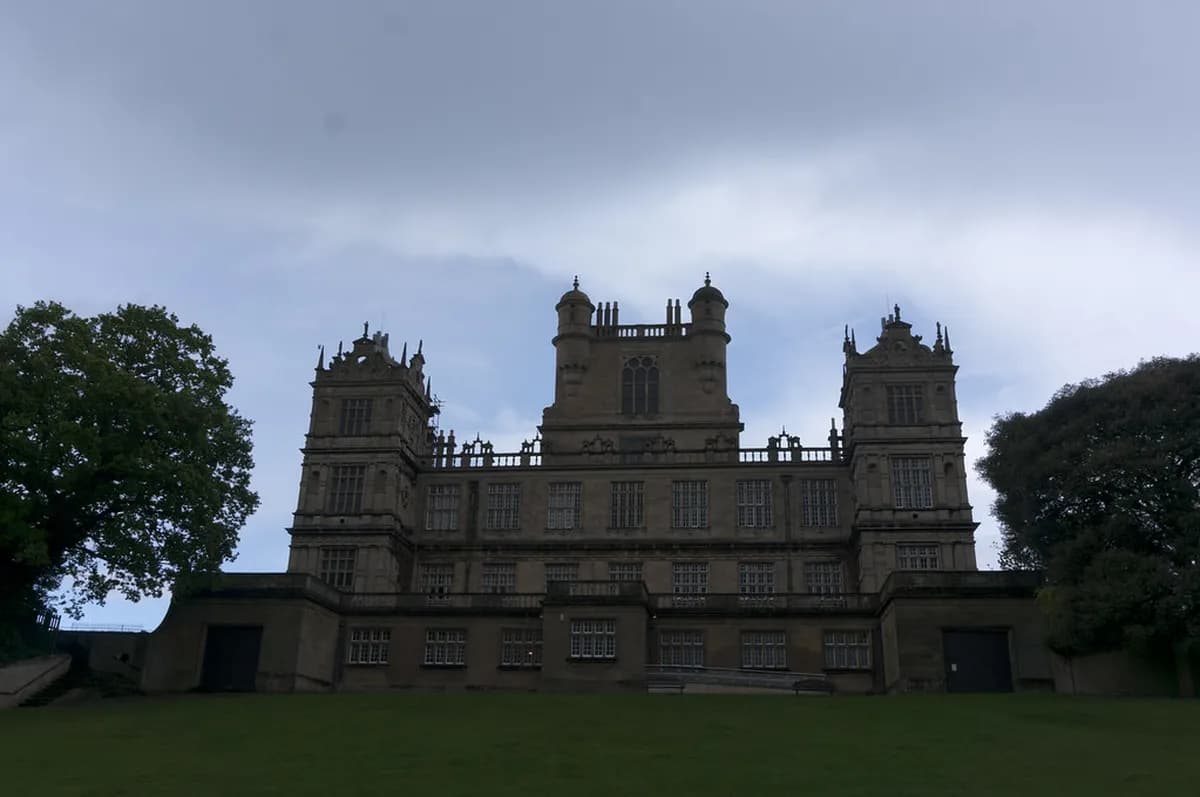
After the restoration of Charles II in 1660, William Cavendish, Duke of Newcastle, purchased the ruined site and hired stonemason Samuel Marsh to transform it. Work ran from 1674 to 1679 and produced a building that architectural historian Nikolaus Pevsner would later describe as "a stately mansion" — an Italianate Ducal Palace with large windows, decorative stonework, and a panoramic terrace overlooking the growing city. The Duke died before its completion but the palace was regarded as one of England's first and finest examples of the Baroque Italianate style.
The Duke's choice to build a residence rather than a rebuilt fortress reflected wider 17th-century aristocratic taste. Defence was no longer the point; visible wealth and social prestige were. The Ducal Palace became a catalyst for Neo-Classical construction across Nottingham, inspiring important buildings nearby including Newdigate House, St Nicholas' parish church, and Willoughby House. Country Life magazine later dubbed it "a major Baroque palace" — a designation that specialists argue has been chronically under-recognised given that the palace predates, and may have influenced, the celebrated east elevation of Chatsworth House.
Many locals initially viewed the structure with ambivalence. Where picturesque medieval ruins might have stood — something akin to what remains at Kenilworth — there was instead a grand private mansion. This tension between the memory of the lost fortress and the reality of the aristocratic palace has shaped visitor reactions to the site ever since. You should check the Nottingham Castle Official Site for current tour details and admission prices in 2026.
By the late 18th century, the palace's appeal to the Cavendish family was waning. Nottingham had grown into an industrial centre with smog-filled streets that made the terrace less desirable. The last great ball was held in 1776. The Dukes retreated to more secluded country seats like Clumber Park, leaving the palace as a boarding school, then apartments, then effectively an empty shell that had become a resented symbol of class oppression overlooking the industrial town below. Before your visit, review the Nottingham Castle ticket prices to plan your budget.
A Rousing of the Rebels: The Reform Riots of 1831
By 1831, Nottingham had become infamous for some of the worst slums in the British Empire, packed with lace and hosiery workers who had no political representation whatsoever. The castle was owned by Henry Pelham Clinton, the 4th Duke of Newcastle, who had left it vacant and who was one of Parliament's most vocal opponents of electoral reform. When news reached Nottingham that the Reform Bill — which would have extended voting rights to the middle and working classes — had been defeated in the House of Lords, the city erupted.
Rioters stormed the castle on the evening of 10 October 1831. They stripped out the remaining furnishings, smashed statues, and lit a fire in the basement that consumed the entire interior. The people of Nottingham watched the palace light up the sky above the rock like a bonfire. The Duke, in a gesture of contemptuous defiance, left the blackened shell un-repaired for 45 years as a silent rebuke to the town.
The 1831 fire was not simply a property crime. It was a moment of working-class direct action at a specific flash point of the Industrial Revolution — a physical assault on a building that represented centuries of aristocratic control over a city whose workers were producing wealth they could not vote to protect. The scorched ruins stood throughout the Chartist agitation of the 1840s as a visible monument to that anger. The castle had been, in sequence: a royal fortress, a private palace, and now a burned-out symbol of class conflict. Today, you can still find fire-damaged stones if you look closely at the exterior walls.
Today, the museum is one of the top things to do for adults in Nottingham. The Rebellion Gallery inside the castle traces this long arc of dissent — from Charles I raising his standard on the site in 1642, through the Reform Riots, to the castle's eventual transfer into public ownership — making a compelling case that Nottingham Castle's political history is as significant as its military one.
The Castle Museum & Art Gallery: Exploring the Collections
In 1875, after the local corporation reached an agreement with the 6th Duke, architect Thomas Chambers Hine was commissioned to renovate the burned-out shell. The work was completed in 1878 and Nottingham Castle became the first municipal museum of art outside London, opened under the curatorship of George Harry Wallis. The intention was explicitly civic: to inspire the pattern designers and artisans working in Nottingham's world-leading lace industry by giving them access to fine art and design collections.
The museum's permanent collection covers several distinct areas. The fine art galleries hold works by Richard Parkes Bonington (born in the nearby village of Arnold), Paul Sandby, Dame Laura Knight, Harold Knight, Winifred Nicholson, and internationally recognised contemporary artists including Zanele Muholi and Edmund de Waal. The decorative arts collection includes Nottingham's renowned salt-glazed stoneware and an internationally significant collection of medieval alabaster sculptures — pieces that tell a remarkable story about the city's economic relationship with the castle rock.
That alabaster collection deserves special attention. From the 14th to 16th centuries, Nottingham was the principal centre of alabaster carving in England, producing altarpieces, religious panels, and devotional figures that were exported across Europe — to France, Spain, the Low Countries, Scandinavia, and Iceland. The workshops that produced these pieces were located in streets immediately adjacent to the castle walls. The carved alabaster panels now housed in the museum are not simply decorative objects; they represent the primary medieval export industry of a city that sat in the castle's economic shadow, and they survive in higher concentrations here than almost anywhere else in the world.
A £30 million transformation project, completed with the castle's reopening in June 2021, added new facilities including the Rebellion Gallery (covering Nottingham's history of political dissent), improved cave access, and updated displays throughout. The Lace Gallery traces the history of Nottingham's defining industry from hand-frame knitting through the Industrial Revolution. During the Second World War, the castle was requisitioned as a military lookout station; the lower bailey was used as allotments tended partly by Italian prisoners of war from a nearby camp at Colwick. All of this layered history is now accessible within a single visit.
Robin Hood vs. Reality: The Outlaws of Sherwood Legend
No discussion of Nottingham Castle history is complete without mentioning the legend of Robin Hood. The stories place the outlaw in constant conflict with the Sheriff, who was a genuine historical official administering the castle and the county on behalf of the crown. While historians debate whether any single historical figure gave rise to the Robin Hood of legend, the ballads date from at least the 14th century and the social tensions they reflect — between forest communities and royal forest law, between tax collectors and the taxed — were entirely real at this site.
The underground passages beneath the castle rock add a tangible layer of atmosphere to these legendary tales. Mortimer's Hole stretches from the deer park all the way down to Brewhouse Yard, where the world-famous Olde Trip to Jerusalem pub — allegedly England's oldest — stands today. You can book a Nottingham caves tour to walk these passages and understand how the rock itself shaped the castle's history of coups, escapes, and secret movements.
Modern exhibits in the castle attempt to balance the fun of the legend with archaeological fact. They trace how the Robin Hood story evolved from medieval ballads into global pop-culture phenomenon — from the first printed versions in the 16th century through to the film adaptations of the 20th and 21st centuries. The bronze statue of Robin Hood near the castle gates is placed in what was, historically, the castle's boundary ditch — a detail that feels somehow fitting for a figure who always existed at the margins of established authority.
The castle's relationship with the Robin Hood legend has historically been complicated. For much of the 20th century, the official interpretation kept the outlaw firmly outside the walls; the statue itself stands just beyond the medieval gatehouse. That approach is changing. Current exhibits treat the legend as what it is: a genuine piece of intangible heritage that has brought the castle to global attention and that grew organically from the real social conditions of medieval Nottingham. Most visitors find that the legend enhances rather than diminishes their appreciation for the castle's documented history.
Is It a Proper Castle? Addressing Common Visitor Myths
Many visitors arrive expecting stone battlements and leave disappointed by what appears to be a manor house in municipal gardens. This reaction is understandable and has been consistent since the 1790s, when the antiquarian John Throsby wrote that the site "falls very short of our wishes and expectation." But the disappointment rests on a misunderstanding of what happened here in 1651, and what survives if you know where to look.
The surviving medieval fabric is more substantial than it first appears. The outer gatehouse — with its original drum towers, vaulted portal, portcullis slots, arrow loops, and medieval bridge — is a rare survival from Henry III's 13th-century building campaign. The eastern and southern curtain walls of the Outer Bailey survive to a considerable height. Sections of the 12th-century Middle Bailey curtain wall and the 13th-century Black Tower are preserved internally. A former drawbridge built for Henry II still spans an impressively deep medieval ditch. At ground level, the footprint of Edward IV's State Apartments is marked out on the upper terrace, clearly visible in the grass.
The massive sandstone rock is itself the most authentic surviving "castle" feature. Its sheer cliffs on the south and west sides provided a natural defense that few enemies could overcome. The current building simply represents the latest chapter in a very long architectural story on a site that has been continuously occupied for nearly a thousand years. Recent restoration work through the Nottingham Castle Transformation Project has added signage and digital displays that explain exactly where the old towers and gatehouses once stood, helping visitors visualise the fortress before the Civil War clearance.
Understanding the 1651 slighting is the key to appreciating the site honestly. The near-wholesale demolition — unusual in its thoroughness even by Civil War standards — was not a gradual decay or a failure of preservation. It was a specific political decision taken in a matter of months. The absence of medieval walls is not an accident of history; it is the outcome of one of the most deliberate acts of architectural destruction in English history. That story, told properly, makes Nottingham Castle stand out rather than fall short among England's heritage sites.
See our Nottingham activities hub for the broader city overview.
Frequently Asked Questions
Why does Nottingham Castle look like a house?
The original medieval castle was demolished after the English Civil War in 1651. The Duke of Newcastle later built a Baroque Ducal Palace on the site between 1674 and 1679. This architectural style was designed for luxury and status rather than military defense. Check the opening times before visiting this unique site.
What happened to the original medieval Nottingham Castle?
Parliament ordered the castle to be demolished between July and November 1651, one of the most thorough "slighting" orders of the Civil War era. Workers tore down the stone walls and towers, leaving only foundations and caves. Most of the medieval masonry was later sold as building material for local construction projects.
Is the Robin Hood legend at Nottingham Castle historically accurate?
While Robin Hood is a legendary figure, the Sheriff of Nottingham was a real historical official based at the castle. The stories reflect genuine social tensions between forest communities, royal forest law, and tax collection in medieval England. The castle provides a documented historical backdrop for these famous folklore tales.
Can you visit the caves under Nottingham Castle?
Yes, guided tours allow visitors to explore the extensive network of man-made caves beneath the castle rock. These include the famous Mortimer's Hole, which was used in the royal coup of 1330 to seize Roger Mortimer. The caves offer a rare glimpse into the medieval life of the fortress and run from below the castle down to Brewhouse Yard.
Nottingham Castle is far more than a grand building on a hill; it is a witness to a millennium of change.
From Norman conquest to industrial riots, the site has remained at the heart of the English story — and the layers of that story are still being uncovered by archaeologists today.
Exploring its history reveals a complex blend of royal power, architectural ambition, political rebellion, and legendary folklore that few sites in England can match.
Plan your visit in 2026 to discover the secrets hidden within the walls and deep inside the sandstone caves.
 Nottingham Castle Opening Times & Visitor GuideMay 16, 2026