
Where Is Nottingham In The UK? 10 Essential Facts & Travel Tips
Discover exactly where Nottingham is located in the UK. Includes maps, travel distances from London, transport links, and key facts about this East Midlands hub.
On this page
Where Is Nottingham In The UK? 10 Essential Facts & Travel Tips
Nottingham is a vibrant city located in the heart of England within the East Midlands region. Many travelers ask exactly where Nottingham is in the UK before planning their historic getaway. The city sits north of the River Trent and serves as the capital of Nottinghamshire. Our complete guide to visiting Nottingham covers everything you need from hotels to day trips.
The city is world-renowned for its legendary links to Robin Hood and his band of Merry Men. Beyond folklore, it stands as a major commercial and cultural hub for central England. Its central location makes it easily accessible from almost every corner of the British Isles. Visitors often find that Nottingham offers a perfect balance of urban energy and rolling countryside.
Geographic Location: Where is Nottingham in the UK?
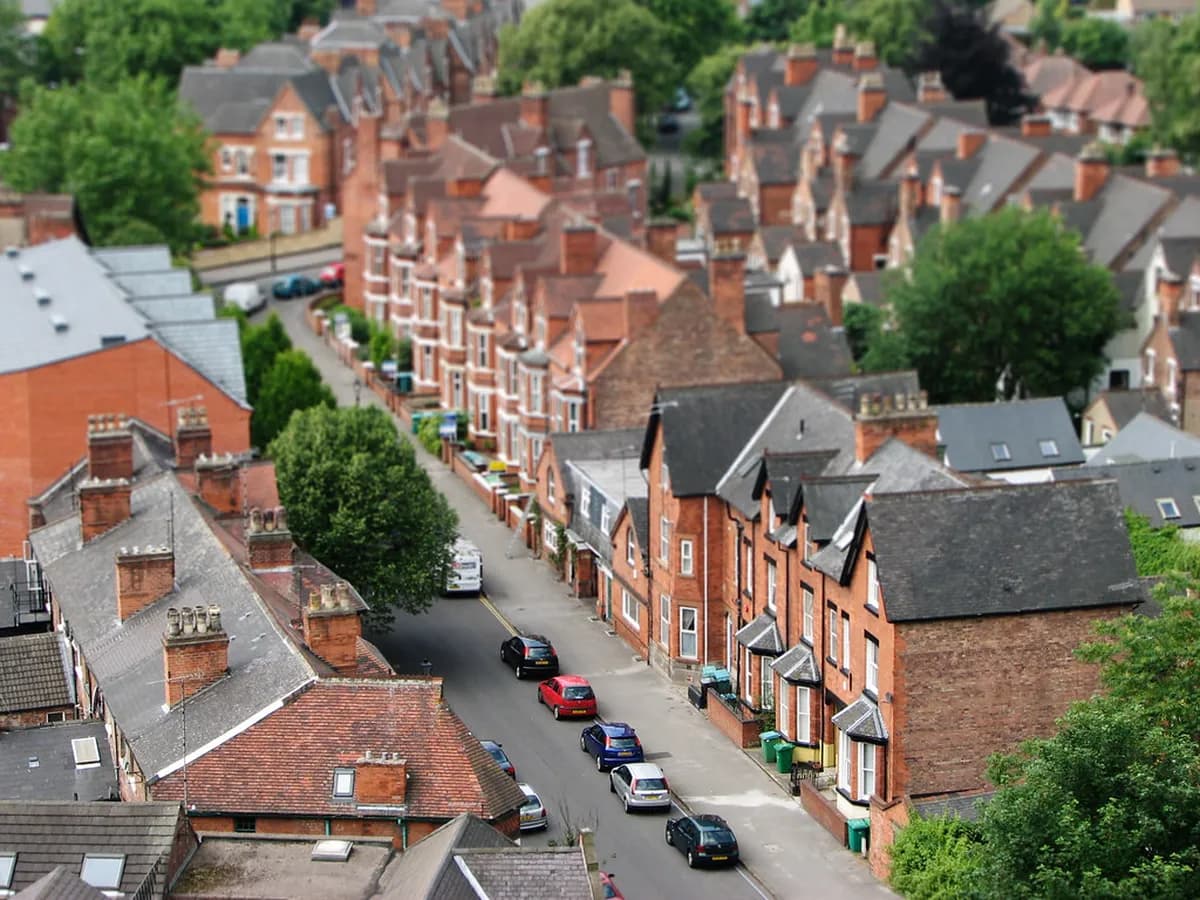
On a map of England, Nottingham sits in the southern half of the East Midlands, roughly equidistant between the Scottish border and the English Channel. It lies approximately 128 miles north of London and about 45 miles northeast of Birmingham. This position places it squarely within what many call the "Heart of England," a geographic label that residents use with genuine pride. Cultural debates often position the city right on the edge of the famous North-South divide — most Nottingham locals consider themselves Midlanders, not northerners.
The city's landscape is defined by sandstone ridges, which allowed for the creation of its famous hand-carved cave network beneath the streets. It sits north of the River Trent, which historically served as a major trade route through the region. The surrounding terrain transitions from urban centre to the lush greenery of the ancient Sherwood Forest within 20 miles. Travelers consistently note how the city integrates these natural features into its modern layout.
Administratively, Nottingham operates as a unitary authority within the wider ceremonial county of Nottinghamshire. This distinction matters for visitors: the city council governs the urban core, while Nottinghamshire County Council covers the surrounding towns and villages. The metropolitan area extends into several neighboring boroughs, creating a large and diverse urban zone. Understanding this geography helps you choose the best areas for your stay and sightseeing.
Fast Facts: Population, Coordinates, and County Info
A few headline numbers help orient any first-time visitor. Nottingham's city population sits at approximately 330,000 residents. The wider Greater Nottingham urban area — covering Broxtowe, Gedling, and Rushcliffe — adds up to over 700,000 people, making it one of the most significant urban centres in the Midlands. The city covers roughly 28 square miles within the official boundary.
The geographic coordinates for the city centre are 52.95°N, 1.15°W. The local climate is temperate: mild summers averaging 20–22°C in July and cool, damp winters rarely dipping below freezing. Nottingham holds UNESCO City of Literature status, awarded in recognition of its literary heritage running from Lord Byron to Alan Sillitoe. It is also the only city in the UK with its own district heating network supplying heat directly to thousands of homes and businesses.
- Region: East Midlands, England
- County: Nottinghamshire (city is a unitary authority within the ceremonial county)
- Coordinates: 52.9548° N, 1.1581° W
- City population: approx. 330,000 (2026 estimate)
- Greater Nottingham: over 700,000
- UNESCO designation: City of Literature
- Nearest major airport: East Midlands Airport (EMA), 13 miles southwest
Distances from Nottingham: How Far to Major UK Cities?
One of the most practical questions visitors ask is how long it takes to reach Nottingham from other UK cities. The table below gives approximate road distances and typical fastest train journey times in 2026. Train times assume a direct or near-direct service on the fastest available timetable.
- London: 128 miles by road, roughly 2.5–3 hours driving via M1; fastest train from London St Pancras 1 hour 37 minutes.
- Birmingham: 45 miles by road, roughly 45–60 minutes driving via M42/A453; train from Birmingham New Street approximately 1 hour 10 minutes.
- Sheffield: 30 miles by road, roughly 35–45 minutes driving via M1 North; train approximately 45–55 minutes.
- Manchester: 75 miles by road, roughly 1.5 hours driving via M60/M1; train via Sheffield approximately 1 hour 30 minutes.
- Leeds: 70 miles by road, roughly 1.5 hours driving via M1; train approximately 1 hour 15 minutes.
- Leicester: 28 miles by road, roughly 30–40 minutes; train approximately 30 minutes.
These travel times confirm why Nottingham is such a practical base for exploring the Midlands and the North. You can reach three different major cities within an hour by rail, which opens up serious day-trip possibilities without paying London hotel prices. The Peak District's southern trailheads at Matlock Bath are just 18 miles west — doable in under 30 minutes by car.
Getting to Nottingham: Transport Links by Rail, Road, and Air
Reaching the city is straightforward whether you prefer traveling by car, train, or plane. The M1 motorway passes just to the west, with Junctions 24 and 25 serving the south of the city and Junction 26 serving the north. Drivers coming from London should allow 2.5 to 3 hours depending on traffic on the southern M1 near Luton. Many visitors prefer to leave the car at a park-and-ride on the outskirts and use the award-winning tram network into the city centre.
Nottingham Railway Station is a major junction served primarily by East Midlands Railway. Direct trains from London St Pancras International complete the journey in as little as 1 hour 37 minutes, with services running roughly every 30 minutes throughout the day. Cross-country services connect the city to Birmingham, Bristol, Manchester, and Sheffield without requiring a change at London. The station building itself is a handsome Edwardian structure that has undergone significant modern renovation and is walkable to most city-centre attractions.
East Midlands Airport (EMA) sits 13 miles southwest of the city centre, off the A453 near Castle Donington. The Skylink express bus runs 24 hours a day between the airport and Nottingham city centre, taking around 40 minutes. EMA serves over 80 destinations including many European budget-airline routes to Spain, Italy, and the Canary Islands. If you are arriving from a European hub, a Eurostar into London St Pancras followed by a direct East Midlands Railway train to Nottingham is often the smoothest combination.
Nottingham's Neighbourhoods: Lace Market, Hockley, and the Waterfront
Knowing which part of the city you are visiting shapes the whole experience. The Lace Market is the historic core, built on the wealth of the Victorian textile trade. Its grand red-brick warehouses now house independent restaurants, creative agencies, and boutique hotels. Walking its cobbled lanes gives the clearest sense of Nottingham's mercantile past and contemporary creative confidence.
Hockley is the younger, louder neighbour immediately east of the Lace Market. It is the city's bohemian quarter: vinyl record shops, specialty coffee, street art on every corner, and a nightlife corridor that fills on Thursday through Saturday evenings. Hockley is also where you find the highest concentration of independent food and drink operators — a far cry from the chain restaurants around Old Market Square. If you are deciding where to eat or stay for a city-break feel, Hockley is the neighbourhood to be in.
The Waterfront and Canal Quarter sit south of the city centre along the Nottingham Canal. Regeneration here has been steady over the past decade, with converted warehouses, waterside bars, and the Motorpoint Arena clustered together. The nearby Island Quarter development, which opened its first phase in 2024, adds canal-side dining and events space led by MasterChef: The Professionals 2018 winner Laurence Henry. For visitors who want to understand modern Nottingham beyond the tourist trail, this southern edge is worth an afternoon.
Why Nottingham? The Legend of Robin Hood and Beyond
Most people first encounter the city through the tales of Robin Hood and the Sheriff of Nottingham. This legendary outlaw is said to have hidden in Sherwood Forest and robbed from the rich to give to the poor. You can find statues and plaques dedicated to these stories throughout the historic city centre, and several guided tours retrace his alleged routes. Our Nottingham Castle history and visitor guide covers the real medieval events that inspired the myth.
A less obvious but increasingly relevant fact is the city's ambition to become the UK's first carbon-neutral city by 2028. Nottingham has invested heavily in its tram network, district heating scheme, and cycling infrastructure to meet this target. Travelers in 2026 will notice the electric bus fleet, the expanding tram lines, and the solar panels visible across public buildings. No general travel guide makes much of this, but for visitors who care about sustainable travel choices, Nottingham genuinely leads the pack among English cities.
The city also holds a rich industrial past as the former lace-making capital of the world. Intricate brickwork and grand warehouses in the Lace Market still stand as a testament to this Victorian prosperity. Nottingham was also home to the world's first Boots pharmacy, founded by Jesse Boot in 1849, and the pharmaceutical heritage remains part of local identity. It is this layering of ancient myth, industrial history, and modern innovation that defines the city's character.
Top Attractions: From Nottingham Castle to the City of Caves
The city skyline is dominated by the historic site of the ducal mansion atop the sandstone cliff. While the original medieval fortress no longer stands, the current building houses a museum and art gallery covering Nottingham's history from the Viking age through to lace-making. Visitors can explore the grounds and take tours of the underground passages carved directly into the rock. Check the Nottingham Castle official listing for current opening times and exhibition schedules before you visit.
Beneath the streets lies a hidden world of over 800 hand-carved sandstone caves. Our guide to the City of Caves Nottingham experience explains how these spaces were used as tanneries, pub cellars, and air-raid shelters across the centuries. This underground network is unique in the UK and offers a genuinely fascinating look at how ordinary people lived through the ages. The guided tours run regularly and last around 45 minutes, making them an easy addition to any itinerary.
Old Market Square serves as the heart of the city and is the largest civic square in the UK outside London. The grand Council House overlooks the square, which hosts seasonal markets, the famous Goose Fair in October, and regular outdoor events. It is the ideal starting point for exploring the nearby Victoria Centre shopping complex and the independent boutiques of the Lace Market. Most visitors use the square as a natural navigation anchor throughout the day.
Culture and Arts: Nottingham Contemporary and Theatres
Art lovers should head to the Lace Market district to find one of England's most significant free contemporary art spaces. The Nottingham Contemporary art gallery occupies a striking building clad in green and gold lace-patterned concrete, a deliberate nod to the city's textile heritage. Its ever-changing exhibitions feature world-renowned artists and are almost always free to enter. The building alone is worth seeing as a piece of architecture.
The city's performing arts scene spans everything from blockbuster touring productions to experimental local theatre. The Theatre Royal and Royal Concert Hall, sharing a building in the city centre, host major West End transfers and visiting orchestras. The smaller Nottingham Playhouse stages original productions and is one of the most respected producing theatres in the East Midlands. Our complete guide to Nottingham attractions keeps an updated list of what is on across all major venues.
As a UNESCO City of Literature, Nottingham takes its literary heritage seriously. The city was the birthplace of Lord Byron, and Alan Sillitoe's novel Saturday Night and Sunday Morning captured Nottingham working-class life with a specificity that still resonates. Independent bookshops and regular author events animate this tradition on an ongoing basis. For visitors who care about literary tourism, the city rewards that interest in ways that most UK city-break guides overlook.
Green Spaces: Parks, Gardens, and Sherwood Forest
Despite its urban density, the city is ringed by outstanding parks and natural reserves. Wollaton Hall and Deer Park is a must-visit: a stunning Elizabethan mansion set within 500 acres of parkland containing a free-roaming herd of red and fallow deer. The hall famously stood in as Wayne Manor in the 2012 film The Dark Knight Rises, a fact that draws a particular category of visitor from around the world. The park is free to enter and sits just three miles west of the city centre.
Sherwood Forest National Nature Reserve is located about 20 miles north of the city along the A614. It is home to the Major Oak, estimated to be between 800 and 1,000 years old, and the tree most associated with Robin Hood's legendary camp. Marked walking trails run through ancient woodland and connect to the visitor centre with its Robin Hood-themed exhibits. The forest remains a vital part of regional identity and is particularly popular with families during school holidays.
The River Trent provides a scenic backdrop for rowing, cycling, and riverside dining south of the centre. Victoria Embankment is a popular local spot for outdoor festivals and events during summer. You can follow the riverside paths for several miles into the Nottinghamshire countryside, linking up with the wider National Cycle Network. These green spaces offer a necessary counterpoint to the energetic pace of the city centre.
A City for Students: University Life in Nottingham
The presence of two large universities significantly shapes the city's young, energetic character. The University of Nottingham is ranked consistently among the UK's top 15 institutions and occupies a parkland campus three miles from the centre. Nottingham Trent University sits in the heart of the city, its buildings woven directly into the urban fabric around Shakespeare Street. Together they bring over 60,000 students to Nottingham during term time, creating a year-round market for affordable food, live music, and nightlife.
This student population supports the diverse independent economy that makes Nottingham interesting to visitors. The nightlife is genuinely excellent, covering everything from the historic pubs of the Lace Market to large club venues near the station. If you are exploring things to do in Nottingham for adults, the student-driven supply of bars and music venues gives the city a consistent energy that pure tourist cities often lack. Many graduates choose to stay, fuelling the tech and creative industries that now define the local economy alongside life sciences.
The two universities also drive a steady flow of public lectures, exhibitions, and cultural events open to non-students. The University of Nottingham's lakeside campus is architecturally remarkable in its own right — a walk around the grounds is worth adding to any itinerary. The student-heavy residential areas like Lenton and Beeston to the west offer a different, more lived-in perspective on Nottingham life away from the tourist circuits.
Planning Your Visit: Best Time to Go and Local Tips
The best time to visit depends on your priorities. Summer (June to August) offers the best weather for Sherwood Forest and the city's parks. October brings the famous Goose Fair, one of Europe's largest travelling funfairs, which has operated in Nottingham since 1284 and now draws over a million visitors each year. December sees the Christmas market fill Old Market Square with dozens of stalls. Our Nottingham events calendar tracks festivals and markets across the full year.
Getting around the city centre on foot is realistic for most visitors — the main attractions sit within a 20-minute walking radius of Old Market Square. The tram network (NET) is clean, frequent, and covers key areas including the railway station, Hockley, and the University of Nottingham campus. A day rider pass covering both trams and buses costs around £5 in 2026 and is the most cost-effective option for day-trippers. Book your Nottingham Castle tickets in advance during school holidays to avoid queuing.
Prices across accommodation, food, and entertainment are noticeably lower than in London or the major southern cities. A solid mid-range dinner for two in the Lace Market costs £50–70 including drinks, compared to £90–120 for an equivalent meal in central London. Following a two-day Nottingham itinerary is the easiest way to structure a first visit without missing the highlights. A little planning means you leave with a clear picture of why this city keeps appearing on UK city-break shortlists.
Frequently Asked Questions
How far is Nottingham from London?
Nottingham is approximately 128 miles north of London. By train, the journey from London St Pancras takes about 1 hour and 40 minutes. If you are driving, the trip typically takes between 2.5 and 3 hours via the M1 motorway depending on traffic. This proximity makes it a popular choice for things to do in Nottingham for adults on a weekend break.
Is Nottingham in the North or South of England?
Nottingham is technically located in the East Midlands, which is the central part of England. While it is often culturally associated with the North, it sits just below the traditional North-South divide line. Most residents consider themselves Midlanders, enjoying a unique regional identity that bridges both halves of the country.
What region is Nottingham in?
Nottingham is the primary city within the East Midlands region of England. This region also includes the neighboring counties of Derbyshire, Leicestershire, Lincolnshire, and Northamptonshire. It serves as a major economic and transport hub for this central part of the United Kingdom.
What is Nottingham famous for?
The city is most famous for the legend of Robin Hood and his adventures in Sherwood Forest. It is also well-known for its historic lace-making industry and its extensive network of man-made caves. Modern fame comes from its two major universities and its status as a City of Literature by UNESCO.
Which is the nearest airport to Nottingham?
East Midlands Airport (EMA) is the nearest airport, located just 13 miles southwest of the city center. It offers many domestic and international flights, particularly to European holiday destinations. The Skylink bus service provides a 24-hour connection between the airport and the city center for travelers.
Nottingham is a city that perfectly blends its legendary past with a bold, sustainable future. Knowing where Nottingham is in the UK is the first step toward discovering this East Midlands gem. From the depths of the City of Caves to the heights of the castle, there is something for every type of traveler. The central location and excellent transport links make it one of the most accessible and underrated destinations in England.
Whether you are a history buff, a nature lover, or simply looking for a city break that does not cost London prices, Nottingham delivers. Plan your visit in 2026 and discover why this East Midlands hub keeps appearing on UK city-break shortlists year after year.
 Nottingham Castle Opening Times & Visitor GuideMay 16, 2026